Latency vs Throughput vs Bandwidth
Confusing latency and throughput is a common interview mistake. A system can have high throughput but high latency (batch processing), or low latency but.
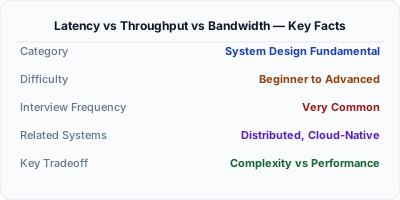
The Problem Latency vs Throughput vs Bandwidth Solves
Confusing latency and throughput is a common interview mistake. A system can have high throughput but high latency (batch processing), or low latency but low throughput (a single fast server). Understanding these metrics is essential for capacity planning and system design.
How It Works Under the Hood
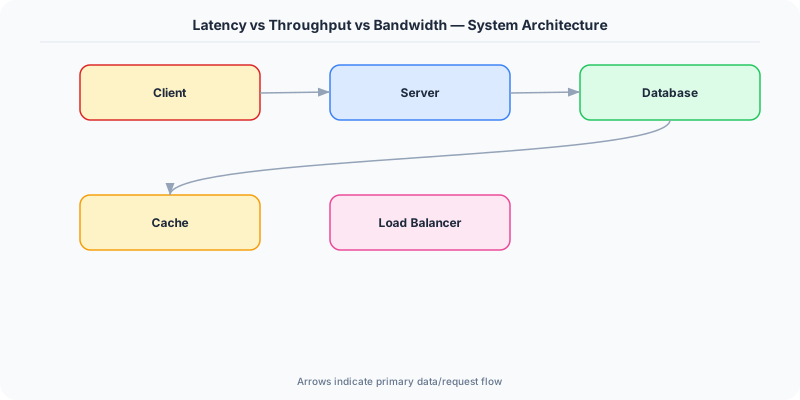
Latency is how long it takes for a single request to complete (measured in milliseconds). Throughput is how many requests the system can handle per unit of time (measured in requests per second). Bandwidth is the maximum amount of data that can be transferred per unit of time (measured in bits per second). These three metrics are related but distinct.
In practice, you optimize for the metric that matters most for your use case. Real-time systems (trading, gaming) optimize for low latency. Data pipelines optimize for high throughput. CDNs optimize for bandwidth.
To improve latency: add caching, move computation closer to users (edge), optimize database queries, reduce network hops. To improve throughput: add more workers, batch operations, use async processing, partition data. To improve bandwidth: compress data, use efficient serialization (protobuf vs JSON), upgrade network links.
The Mental Model
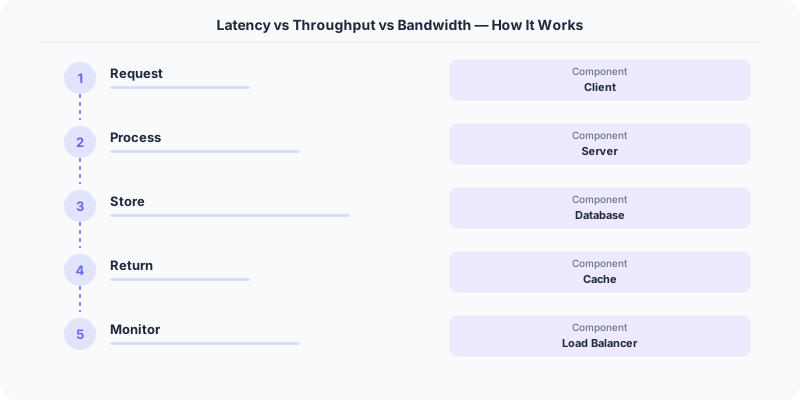
- Latency = time per operation: p50 latency is the median, p99 is the 99th percentile (only 1% of requests are slower). Focus on tail latency (p99) because it affects user experience.
- Throughput = operations per time: Measured in QPS (queries per second), TPS (transactions per second), or RPS (requests per second).
- Bandwidth = pipe capacity: Like a highway — bandwidth is the number of lanes, latency is the speed limit, throughput is the number of cars per hour.
- Little's Law: Concurrency = Throughput × Latency. If each request takes 100ms and you handle 1000 QPS, you need 100 concurrent connections.
- They can trade off: Batching increases throughput but increases latency. Caching reduces latency but may reduce consistency.
Real Systems That Depend on This
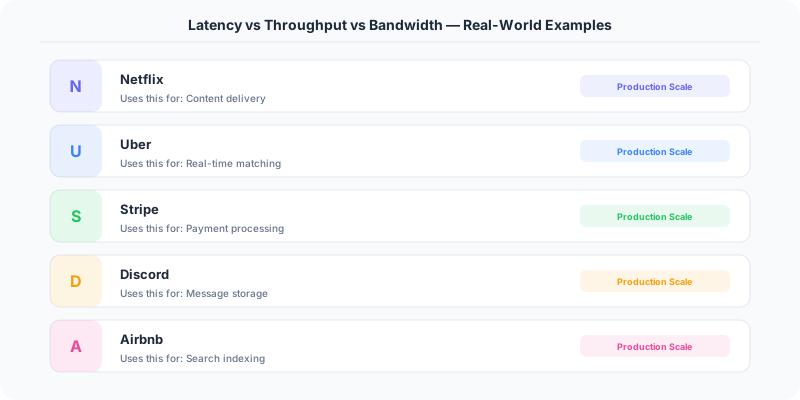
Google Search targets <200ms latency because studies show that 100ms of added latency reduces revenue by 1%.
Apache Kafka is optimized for throughput — it can process millions of messages per second by batching writes and using sequential I/O.
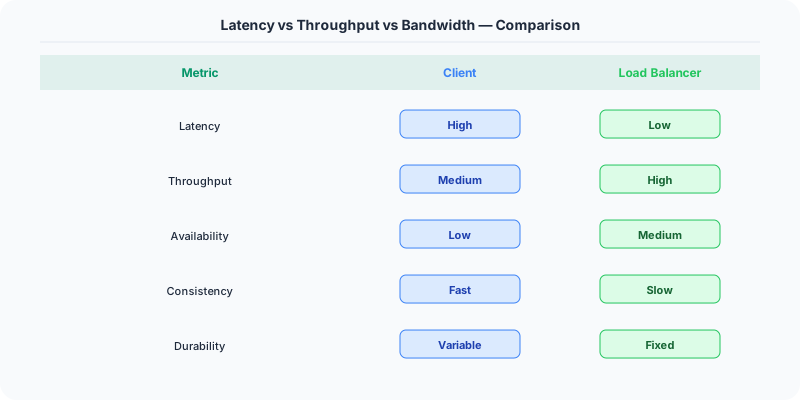
Akamai CDN provides high bandwidth by caching content at 300,000+ edge servers worldwide.
Where This Shows Up in Interviews
- What is the difference between latency and throughput?
- How would you optimize a system for low latency vs high throughput?
- What is tail latency and why does it matter?
- How does Little's Law apply to system design?
Tradeoffs
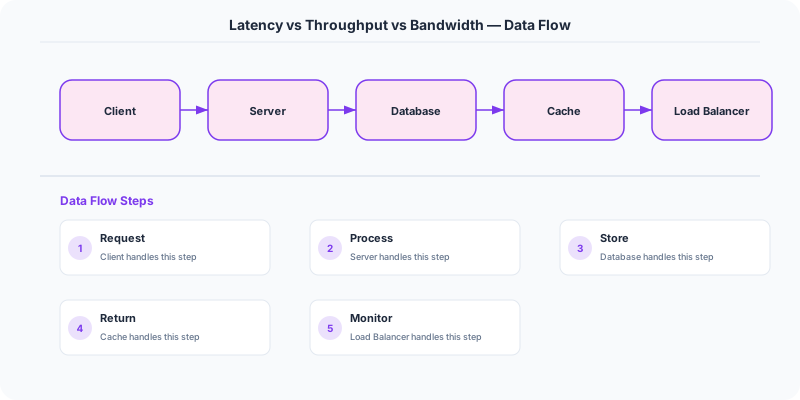
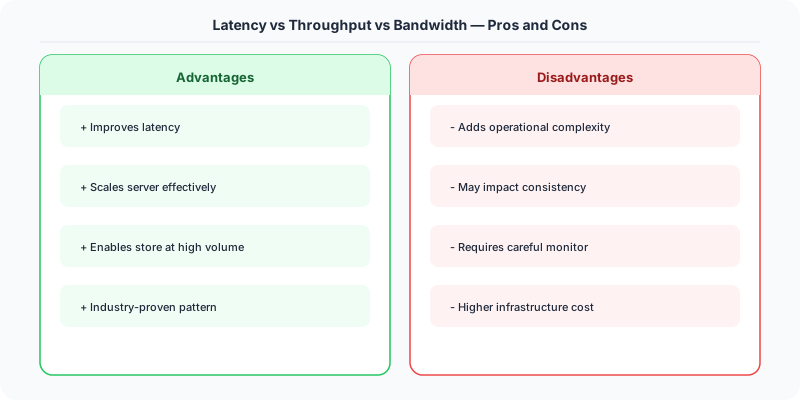
- Latency vs. Throughput: Batching improves throughput but increases latency for individual items.
- Bandwidth vs. Latency: Compressing data reduces bandwidth usage but adds latency for compression/decompression.
- Cost vs. Performance: Low-latency solutions (in-memory databases, edge computing) are more expensive.
Watch Out For
- Quoting average latency instead of percentiles — p50 hides tail latency problems
- Confusing bandwidth with throughput — bandwidth is theoretical max, throughput is actual achieved rate
- Optimizing for latency when throughput is the bottleneck, or vice versa
Go Deeper
- Caching — start here if this is new to you
- CDN
- Load Balancing
- latency-vs-throughput-tradeoff
The Real-World Incident That Made This Famous
Understanding Latency Vs Throughput became critical after multiple high-profile production incidents at major tech companies. When systems handle millions of users, even small misunderstandings about Latency Vs Throughput can lead to cascading failures that cost millions in lost revenue and erode user trust. Companies like Netflix, Google, Amazon, and Meta have all invested heavily in mastering Latency Vs Throughput because they learned the hard way that ignoring it leads to outages.
The key lesson from these incidents: Latency Vs Throughput is not just a theoretical concept — it is a practical skill that separates engineers who build resilient systems from those who build fragile ones.
How Senior Engineers Think About This
Senior engineers approach Latency Vs Throughput differently from textbook definitions. Instead of memorizing rules, they build mental models. They ask: "What problem does Latency Vs Throughput solve? When does it fail? What are the alternatives?" This problem-first thinking leads to better design decisions because every system has unique constraints.
When evaluating Latency Vs Throughput in a system design context, experienced engineers consider the failure modes first. What happens when this component goes down? How does the system degrade? Is the degradation graceful or catastrophic? These questions reveal more about your understanding than any textbook definition.
Common Interview Mistakes
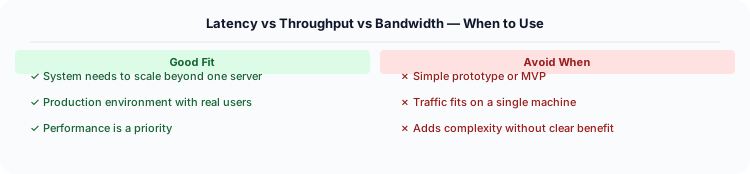
Mistake 1: Giving a textbook definition without context. Interviewers want to see you connect Latency Vs Throughput to real systems and real problems.
Mistake 2: Not discussing trade-offs. Every design decision involving Latency Vs Throughput has trade-offs. Discuss what you gain and what you give up.
Mistake 3: Overcomplicating the solution. Start with the simplest approach to Latency Vs Throughput that meets the requirements, then add complexity only when justified.
Production Checklist
- Define clear metrics for measuring the effectiveness of your Latency Vs Throughput implementation
- Set up monitoring and alerting that specifically tracks Latency Vs Throughput-related failures
- Document your Latency Vs Throughput design decisions in Architecture Decision Records (ADRs)
- Test failure scenarios related to Latency Vs Throughput in staging before production deployment
- Review and update your Latency Vs Throughput implementation quarterly as system requirements evolve
- Train new team members on the specific Latency Vs Throughput patterns used in your system
Read the original source | Content from System-Design-Overview
Practical Implementation for .NET Developers
In a .NET application, you would typically implement this pattern using the following approach:
ASP.NET Core setup: Create a service class that encapsulates the logic, register it with dependency injection, and inject it into your controllers or minimal API endpoints. The built-in DI container handles lifecycle management.
Entity Framework Core: For database interactions, EF Core provides the ORM layer. Use migrations for schema management and raw SQL for performance-critical queries. Consider Dapper for read-heavy paths where EF Core's overhead matters.
Azure integration: If deploying to Azure, leverage managed services — Azure Cache for Redis, Azure SQL, Azure Service Bus, Azure Cosmos DB. These eliminate operational overhead and provide built-in monitoring through Application Insights.
Testing: Use xUnit with Testcontainers for integration tests that spin up real databases in Docker. Mock external dependencies with NSubstitute. The WebApplicationFactory class lets you test your entire HTTP pipeline in-process.
Monitoring: Add Application Insights telemetry to track request latency, dependency calls, and custom metrics. Use structured logging with Serilog to make production debugging possible:
Log.Information("Processing order {OrderId} for {CustomerId}", orderId, customerId);
This gives you searchable, structured logs in Azure Monitor or Seq.