Read-Through vs Write-Through Cache
Read-through caches fetch data from the origin on cache miss. Write-through caches update the origin synchronously on every write.
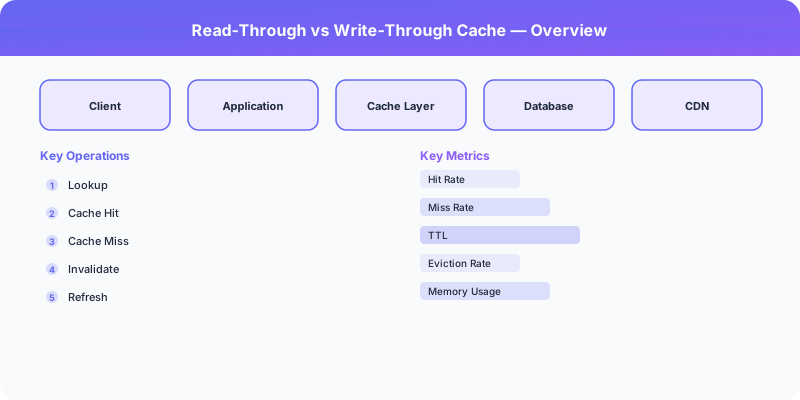
Read-through caches fetch data from the origin on cache miss. Write-through caches update the origin synchronously on every write. They are complementary strategies for keeping cache and database in sync.
Which Should You Pick?
It depends on what matters most for your system. Here is a quick decision framework:
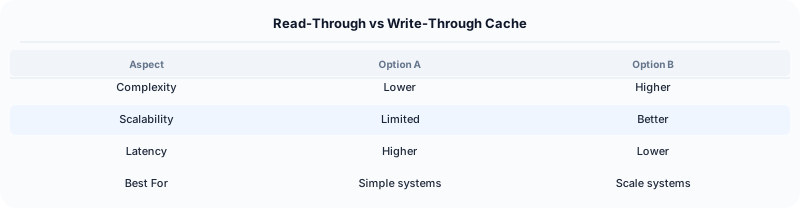
Go with Read-Through if:
- Read-heavy workloads
- Data is accessed repeatedly
- You want to simplify the application layer
Go with Write-Through if:
- Data freshness is critical
- Reads frequently follow writes
- Combined with Read-Through for complete strategy
Understanding Read-Through
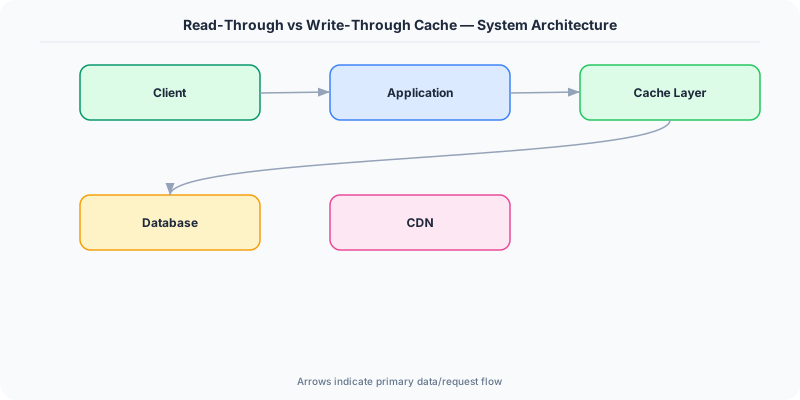
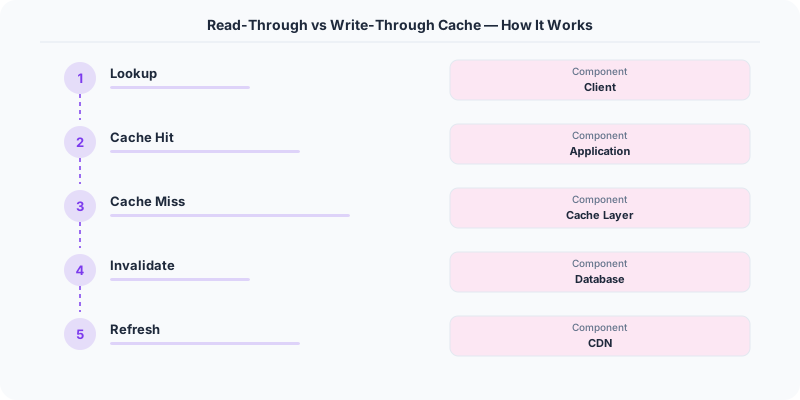
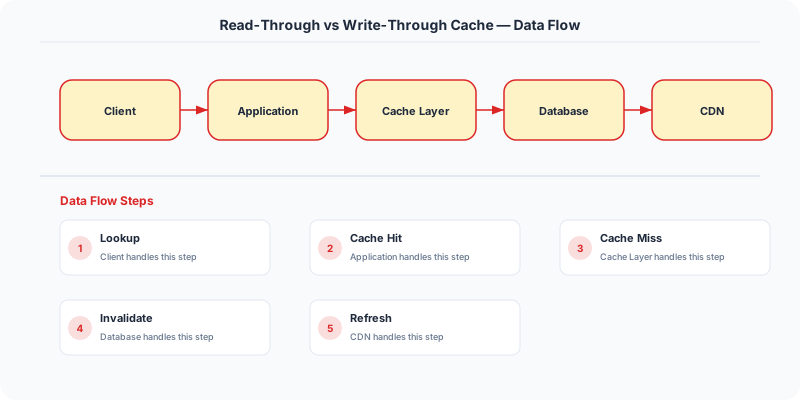
Cache fetches from DB on miss, caches result. Application only talks to cache.
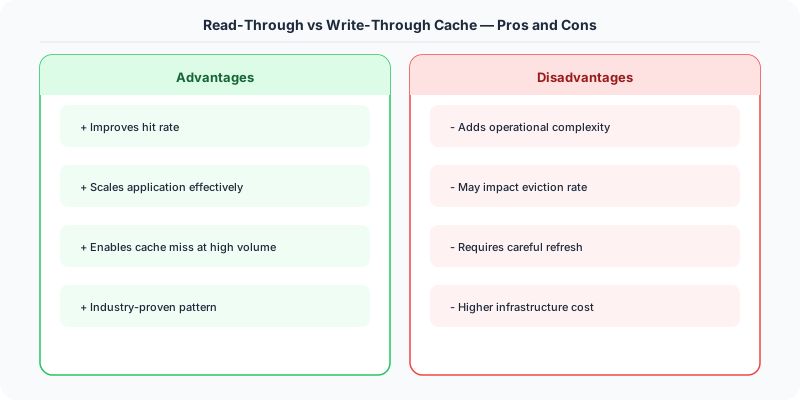
Upsides: Simpler application code, Cache is always populated for accessed data, Good for read-heavy workloads.
Downsides: First read is always a miss (cold start), Cache may serve stale data if DB is updated directly.
Understanding Write-Through
Every write updates cache AND database synchronously.
Upsides: Cache is always up to date, Strong consistency between cache and DB, No stale data.
Downsides: Higher write latency (two writes per operation), Writes data to cache that may never be read, Cache pollution with infrequently accessed data.
How Companies Handle This
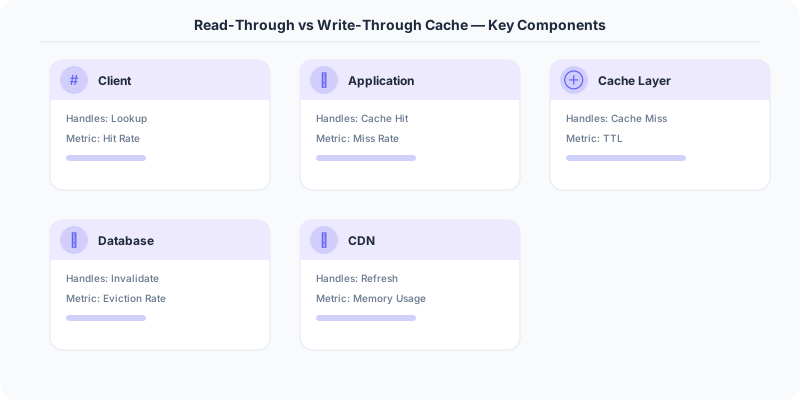
Amazon DynamoDB Accelerator (DAX) implements both read-through and write-through caching.
CDNs use read-through — content is fetched from origin on first request and cached at the edge.
Hibernate ORM supports write-through caching for database entities.
What to Say in an Interview
In interviews, combine strategies: Write-Through for frequently updated, frequently read data. Cache-Aside (lazy loading) for infrequently updated data. Write-Behind for high-write-volume data where some data loss is acceptable.
Source | System-Design-Overview
Practical Implementation for .NET Developers
In a .NET application, you would typically implement this pattern using the following approach:
ASP.NET Core setup: Create a service class that encapsulates the logic, register it with dependency injection, and inject it into your controllers or minimal API endpoints. The built-in DI container handles lifecycle management.
Entity Framework Core: For database interactions, EF Core provides the ORM layer. Use migrations for schema management and raw SQL for performance-critical queries. Consider Dapper for read-heavy paths where EF Core's overhead matters.
Azure integration: If deploying to Azure, leverage managed services — Azure Cache for Redis, Azure SQL, Azure Service Bus, Azure Cosmos DB. These eliminate operational overhead and provide built-in monitoring through Application Insights.
Testing: Use xUnit with Testcontainers for integration tests that spin up real databases in Docker. Mock external dependencies with NSubstitute. The WebApplicationFactory class lets you test your entire HTTP pipeline in-process.
Monitoring: Add Application Insights telemetry to track request latency, dependency calls, and custom metrics. Use structured logging with Serilog to make production debugging possible:
Log.Information("Processing order {OrderId} for {CustomerId}", orderId, customerId);
This gives you searchable, structured logs in Azure Monitor or Seq.
Real-World Decision Framework
When choosing between read-through and write-through caching in production, the decision comes down to your read-to-write ratio and consistency requirements.
Read-through caching works best when your application reads the same data far more often than it writes. The cache sits between your application and the database — on a cache miss, the cache itself fetches from the database, stores the result, and returns it. This is the pattern behind CDN caches, DNS resolvers, and most web application caches.
Write-through caching ensures every write goes to both the cache and the database before acknowledging success. This eliminates stale data but adds write latency. Banks, inventory systems, and any application where showing stale data is unacceptable should consider this pattern.
How Netflix Uses Read-Through Caching
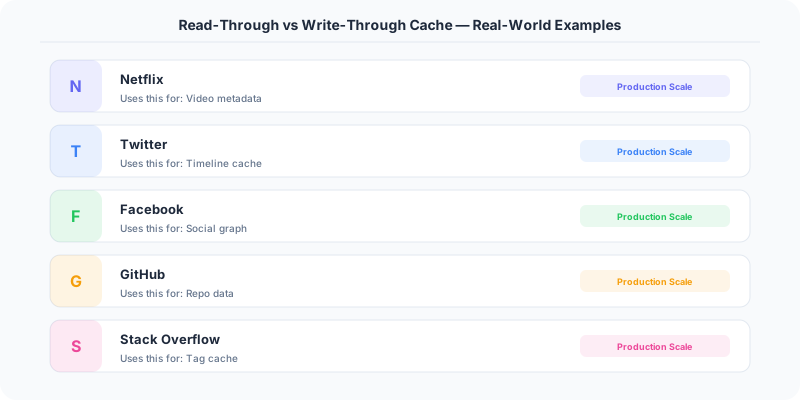
Netflix uses EVCache (built on Memcached) as a read-through cache for user profiles, viewing history, and content metadata. When a user opens the app, their profile data is served from cache in under 1ms. If the cache misses, EVCache fetches from Cassandra and populates the cache for subsequent requests. With 200+ million subscribers, this pattern reduces database load by over 99%.
How Stripe Uses Write-Through Caching
Stripe's payment processing requires absolute consistency — you cannot show a user their balance is $100 when a $50 charge just went through. Their ledger system writes through to both cache and database atomically, ensuring every read reflects the latest state.
Decision Checklist for System Design Interviews
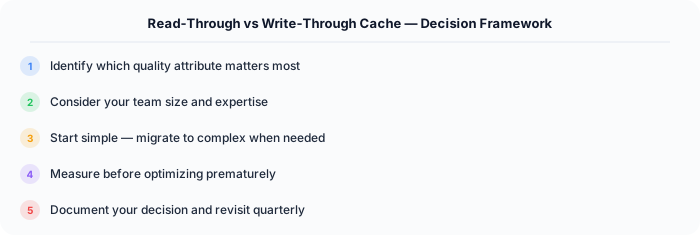
Ask these questions when an interviewer presents a caching scenario:
- What is the read-to-write ratio? High reads → read-through. Balanced → write-through.
- Can the application tolerate stale data? Yes → read-through with TTL. No → write-through.
- What is the acceptable write latency? Low tolerance → read-through (writes skip cache). High tolerance → write-through.
- How large is the working set? If it fits in memory → write-through everything. If not → read-through with eviction.
- Do you need cache warming? Read-through naturally warms on first access. Write-through is always warm for recently written keys.
.NET Implementation Pattern
In ASP.NET Core, read-through caching maps to IDistributedCache.GetAsync() with a fallback to database. Write-through maps to updating both IDistributedCache and your DbContext in the same service method. Use IMemoryCache for single-server scenarios and Redis via AddStackExchangeRedisCache() for distributed deployments.