Long Polling vs WebSockets
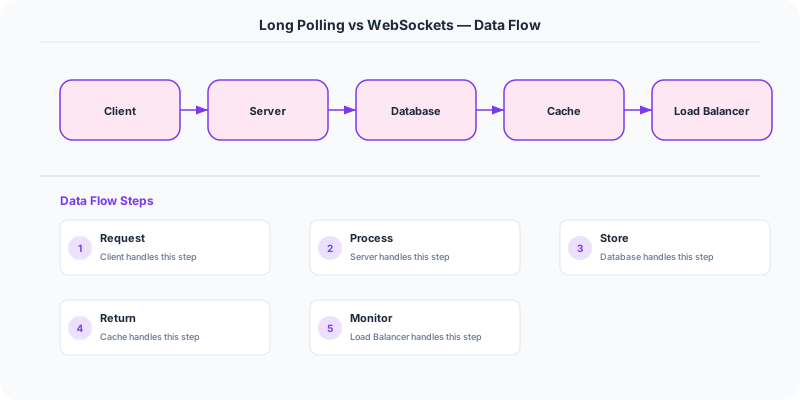
Both enable near-real-time communication between client and server. Long polling keeps an HTTP connection open until new data is available.
Long Polling vs WebSockets
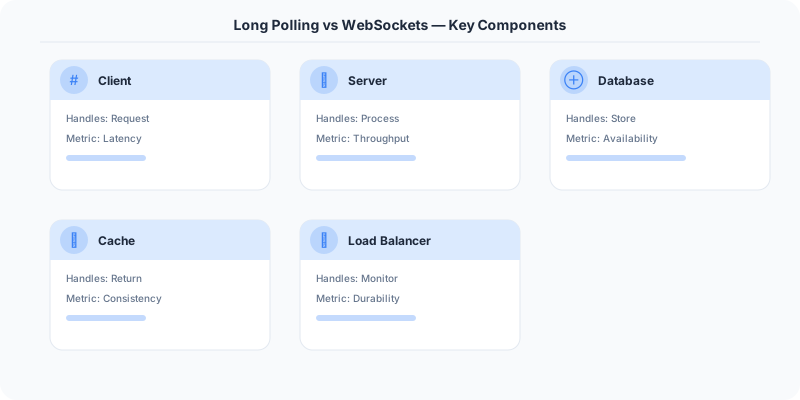
Both enable near-real-time communication between client and server. Long polling keeps an HTTP connection open until new data is available. WebSockets provide a persistent bidirectional connection.
The Case for Long Polling
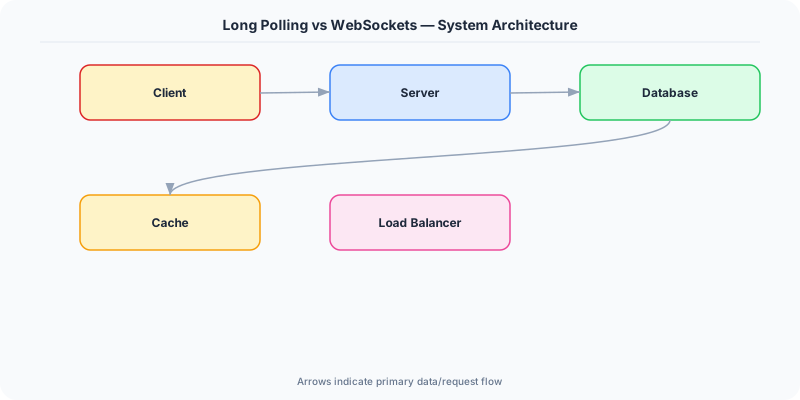
Client sends an HTTP request. Server holds it open until new data or timeout. Client immediately re-requests.
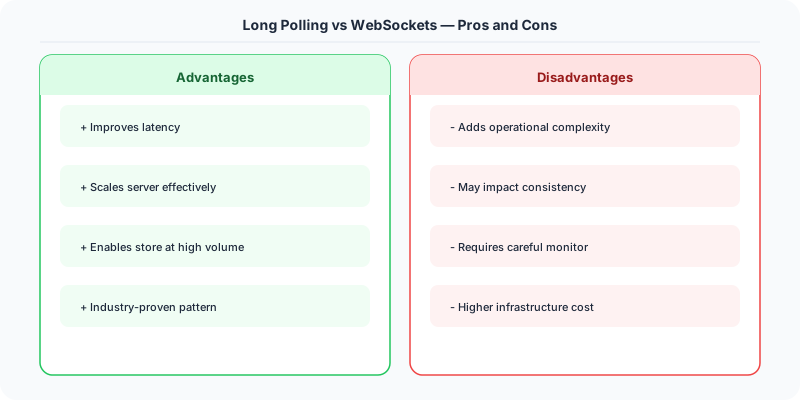
What you gain: Works everywhere (standard HTTP). Simpler to implement. Works through all firewalls/proxies. Easy to load balance.
What you lose: Higher latency (new request after each response). More overhead (HTTP headers per request). Server holds connections idle. Not truly real-time.
Best when: Updates are infrequent; Infrastructure does not support WebSockets; Simple implementation is preferred; One-directional updates (server to client).
The Case for WebSockets
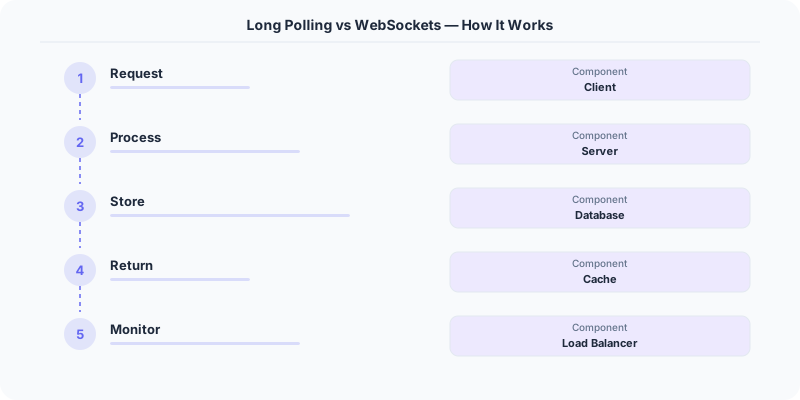
Persistent TCP connection after HTTP upgrade handshake. Full-duplex bidirectional communication.
What you gain: True real-time (sub-100ms latency). Low overhead (2-byte frame headers). Bidirectional communication. Efficient for high-frequency updates.
What you lose: Stateful connections (harder to scale). Not all proxies support WebSocket upgrade. Requires reconnection logic. More complex server infrastructure.
Best when: Real-time is critical (chat, gaming, trading); High-frequency updates (live dashboards, feeds); Bidirectional communication needed; Low latency is essential.
Side-by-Side
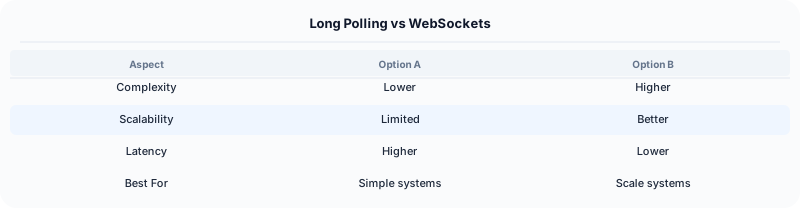
| Long Polling | WebSockets | |
|---|---|---|
| Strengths | Works everywhere (standard HTTP) | True real-time (sub-100ms latency) |
| Weakness | Higher latency (new request after each response) | Stateful connections (harder to scale) |
| Use when | Updates are infrequent | Real-time is critical (chat, gaming, trading) |
In the Real World
Slack uses WebSockets for real-time messaging — every keystroke in typing indicators is a WebSocket message.
Facebook historically used long polling for chat before migrating to WebSockets for better performance.
Stock trading platforms use WebSockets for real-time price feeds where every millisecond matters.
The Interview Take
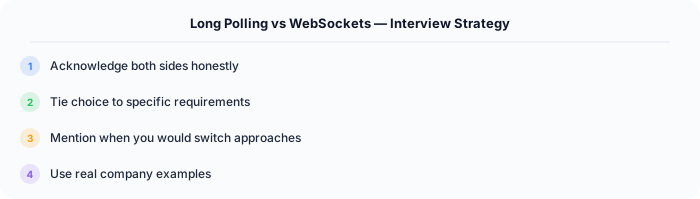
Default to WebSockets for real-time features in your system design. Mention long polling as a fallback for clients that cannot support WebSockets.
Source | System-Design-Overview
Practical Implementation for .NET Developers
In a .NET application, you would typically implement this pattern using the following approach:
ASP.NET Core setup: Create a service class that encapsulates the logic, register it with dependency injection, and inject it into your controllers or minimal API endpoints. The built-in DI container handles lifecycle management.
Entity Framework Core: For database interactions, EF Core provides the ORM layer. Use migrations for schema management and raw SQL for performance-critical queries. Consider Dapper for read-heavy paths where EF Core's overhead matters.
Azure integration: If deploying to Azure, leverage managed services — Azure Cache for Redis, Azure SQL, Azure Service Bus, Azure Cosmos DB. These eliminate operational overhead and provide built-in monitoring through Application Insights.
Testing: Use xUnit with Testcontainers for integration tests that spin up real databases in Docker. Mock external dependencies with NSubstitute. The WebApplicationFactory class lets you test your entire HTTP pipeline in-process.
Monitoring: Add Application Insights telemetry to track request latency, dependency calls, and custom metrics. Use structured logging with Serilog to make production debugging possible:
Log.Information("Processing order {OrderId} for {CustomerId}", orderId, customerId);
This gives you searchable, structured logs in Azure Monitor or Seq.
Real-World Decision Framework
Long polling and WebSockets both enable real-time communication, but they work fundamentally differently. Long polling uses standard HTTP — the client sends a request, and the server holds it open until new data is available. WebSockets upgrade an HTTP connection to a persistent, bidirectional channel.
When Long Polling Wins
Long polling is simpler and works everywhere HTTP works:
- Notification systems: Check for new notifications by holding a request open. When a notification arrives, respond and the client immediately sends a new request.
- Simple chat: Early versions of Facebook Messenger used long polling because it worked through corporate firewalls and proxies that blocked WebSockets.
- Legacy environments: Systems behind strict firewalls or proxies that only allow HTTP traffic.
- Low-frequency updates: If updates come every 10-30 seconds, long polling is efficient enough.
Advantages: Works through all proxies and firewalls, uses standard HTTP, trivial to implement, stateless on the server side.
When WebSockets Win
WebSockets provide true real-time bidirectional communication:
- Live chat: Slack, Discord, and WhatsApp use WebSockets for instant message delivery with typing indicators.
- Collaborative editing: Google Docs and Figma push character-by-character changes over WebSockets.
- Live gaming: Online multiplayer games need sub-50ms bidirectional communication.
- Financial dashboards: Stock trading platforms push price updates multiple times per second.
- IoT: Connected devices stream sensor data continuously.
Advantages: Lower latency, lower overhead (no repeated HTTP headers), bidirectional communication, server can push without client requesting.
Performance Comparison
| Factor | Long Polling | WebSocket |
|---|---|---|
| Connection overhead | High (new HTTP request each time) | Low (single persistent connection) |
| Latency | 100-500ms (depends on poll interval) | 1-10ms |
| Server memory | Low (stateless) | Higher (maintains connection state) |
| Scalability | Easier (standard HTTP infra) | Harder (sticky sessions, connection limits) |
| Firewall compatibility | Excellent | Good (some block port 443 upgrade) |
The Decision in Interviews
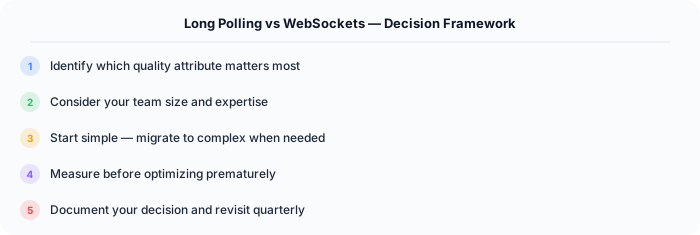
For most real-time features, mention WebSockets as the preferred approach, but acknowledge that you would fall back to long polling for compatibility. Mention that ASP.NET Core SignalR does exactly this — it negotiates WebSocket first, then falls back to Server-Sent Events, then long polling.
.NET Implementation
Long polling: Simple HTTP endpoint that uses TaskCompletionSource<T> to hold the response until data arrives. WebSocket: Use ASP.NET Core SignalR — it abstracts the transport, provides automatic reconnection, and scales with Azure SignalR Service for thousands of connections. For raw WebSockets, use WebSocketManager middleware.