How Instagram Scaled to 14 Million Users With 3 Engineers
The architectural decisions that allowed Instagram to scale from zero to 14 million users with a team of 3 engineers — PostgreSQL, Redis, Memcached, and a.
Company Context
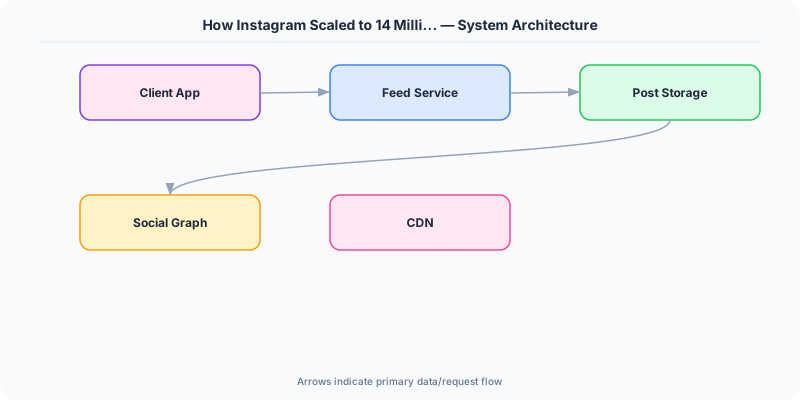
Instagram launched in October 2010 and gained 1 million users in two months. By April 2012, when Facebook acquired it for $1 billion, Instagram had 30 million users on iOS alone, with an Android launch adding millions more. The engineering team throughout this explosive growth was just 3 to 5 engineers.
This is one of the most studied scaling stories in the industry because Instagram did it without building custom infrastructure, without a dedicated DevOps team, and without following the distributed systems playbook that companies like Netflix and Uber adopted. They did it with boring technology, used well.
The Technical Stack
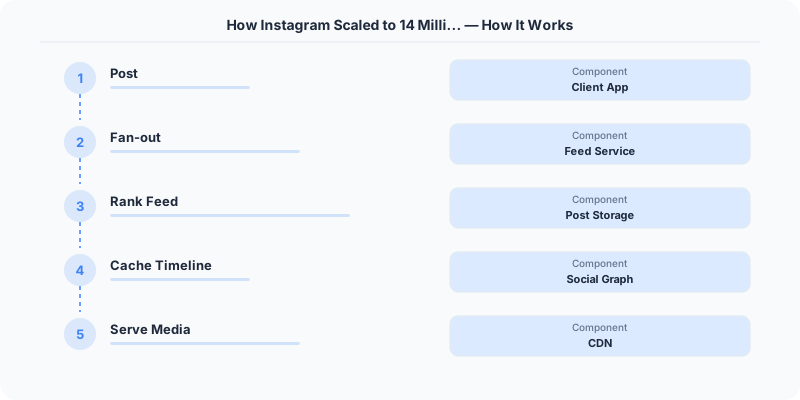
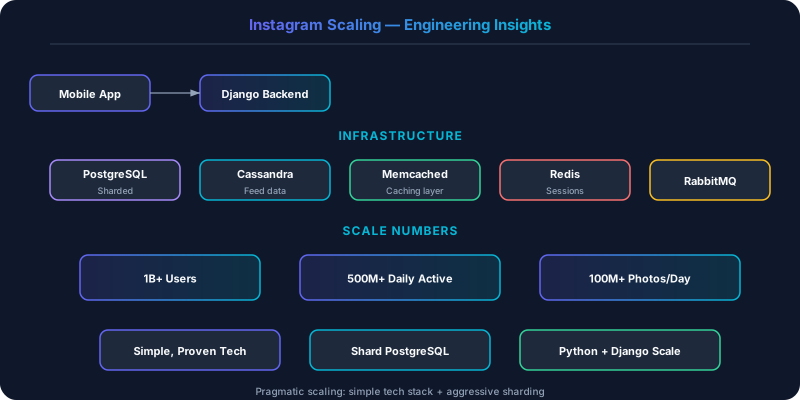
Django and Python for the application layer. Instagram ran on Django, the Python web framework. It was not the fastest choice, but the team knew Python well, Django had mature libraries for authentication, ORM, and admin functionality, and developer productivity mattered more than raw performance when every engineer hour counted.
PostgreSQL for the primary database. Not Cassandra, not MongoDB, not a custom datastore — PostgreSQL. The team used PostgreSQL for photos, users, likes, comments, followers, and tags. They knew its operational characteristics, trusted its ACID guarantees, and could debug query plans.
Redis for feed generation and counters. The activity feed ("who liked your photo") was stored in Redis lists. Redis was also used for counting (likes per photo, followers per user) and as a session store.
Memcached for read caching. Frequently accessed data (user profiles, photo metadata) was cached in Memcached to reduce PostgreSQL load. The caching strategy was simple: cache-aside with TTL-based expiration.
Amazon S3 for photo storage. Photos were stored in S3 with CloudFront as the CDN. The application server never served photo bytes directly.
Amazon EC2 for compute. No containers, no Kubernetes, no service mesh. EC2 instances running Django behind an Elastic Load Balancer.
Key Architectural Decisions
Keep the stack simple
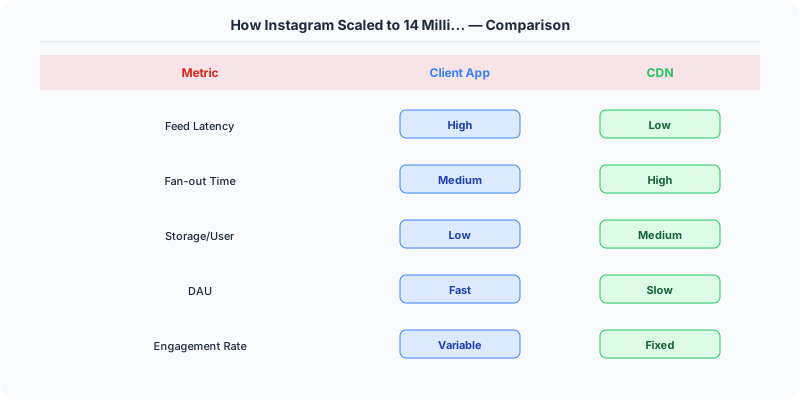
The team's guiding principle was: do not adopt a technology unless there is a clear and pressing need. They resisted the temptation to add Kafka, Elasticsearch, or any distributed system that would require dedicated operational expertise. Every additional system in the stack is a system that can fail, a system that needs monitoring, and a system that someone has to understand at 3 AM.
Mike Krieger (co-founder) said their approach was to use "tried-and-true technologies" and "keep complexity to a minimum." This is the opposite of resume-driven development, and it worked.
Shard PostgreSQL when necessary
As the user base grew, a single PostgreSQL instance could not handle the write load. Instagram sharded PostgreSQL by user ID using a custom sharding layer. Each logical shard mapped to a physical PostgreSQL instance.
The sharding approach was practical: they created thousands of logical shards and mapped them to a smaller number of physical servers. Adding capacity meant adding a physical server and migrating some logical shards to it.
Importantly, they chose sharding over switching to a NoSQL database. PostgreSQL's reliability, their team's familiarity with it, and the ability to run SQL queries for debugging and analytics made the migration cost of switching databases higher than the cost of building a sharding layer.
Generate IDs with PostgreSQL
With a sharded database, auto-incrementing primary keys do not work (two shards would generate the same ID). Instagram built a custom ID generation scheme using PostgreSQL functions. Each ID is a 64-bit integer composed of:
- Milliseconds since a custom epoch (41 bits)
- Logical shard ID (13 bits)
- Per-shard auto-incrementing sequence (10 bits)
This generates globally unique, time-sortable IDs without a separate coordination service. The ID encodes the shard location, so the routing layer can determine the shard from the ID itself.
Scale reads with replicas and caching
Before sharding, Instagram scaled reads by adding PostgreSQL read replicas and placing Memcached in front of the database. Most read traffic hit the cache. Cache misses went to read replicas. Only writes went to the primary.
This three-tier approach (cache, read replica, primary) handled the vast majority of their traffic growth. Sharding was only needed for write scaling.
What They Did Not Do
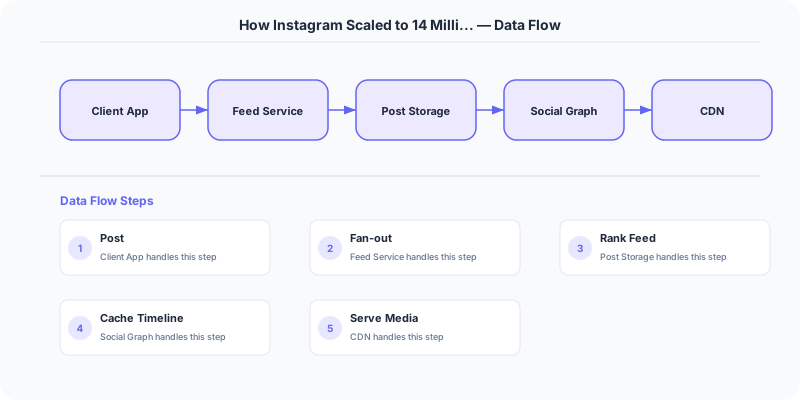
Understanding what Instagram avoided is as instructive as understanding what they built:
- No microservices. The entire application was a single Django monolith. No service discovery, no RPC framework, no distributed tracing needed.
- No custom storage engine. They did not build a purpose-built datastore. PostgreSQL and Redis handled everything.
- No event-driven architecture. Background tasks (notifications, feed generation) ran as Celery workers consuming from a Redis queue. Simple and sufficient.
- No containers or orchestration. EC2 instances, manually managed. Configuration management with Fabric (a Python deployment tool).
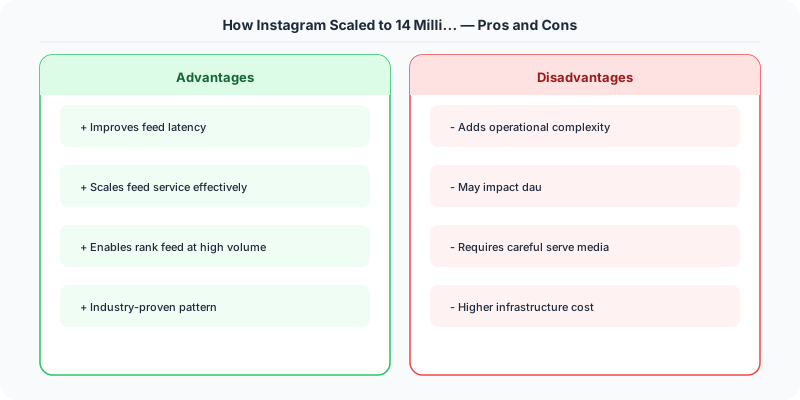
Strengths
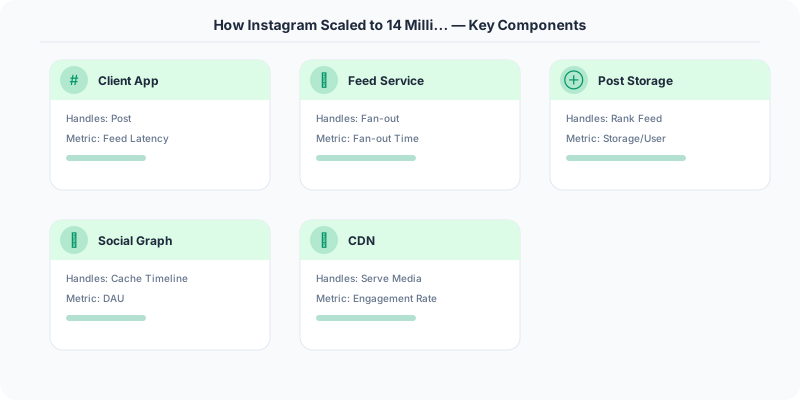
- Maximum developer productivity with a tiny team
- Operationally simple — fewer systems mean fewer failure modes
- Fast iteration on product features (no infrastructure overhead)
- Proven technologies with well-understood failure modes
Weaknesses
- The monolith eventually became a bottleneck as the team grew past 20 engineers
- Sharding PostgreSQL required significant custom engineering
- The simple stack could not easily support new use cases (search, recommendations, real-time features) without adding systems
- Manual infrastructure management did not scale past a certain team size
Modern Evolution
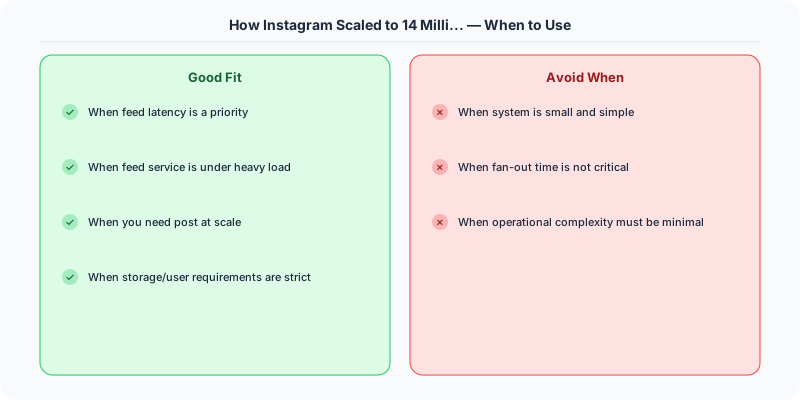
After the Facebook acquisition, Instagram's infrastructure evolved significantly. The team grew to hundreds of engineers. They adopted Facebook's internal infrastructure: TAO for the social graph, Cassandra for high-write workloads, and a more sophisticated service architecture. But the lesson from the early days remains: you do not need distributed systems to scale to millions of users.
Interview Relevance
Instagram's scaling story is the counterargument to "we need microservices and Kafka." When an interviewer asks you to design a photo-sharing app, starting with "Django, PostgreSQL, Redis, S3" and explaining how far that takes you demonstrates pragmatism. You should also know when this approach stops working (team growth, write scaling limits) and what the next steps look like (sharding, service extraction).
Practical Implementation for .NET Developers
In a .NET application, you would typically implement this pattern using the following approach:
ASP.NET Core setup: Create a service class that encapsulates the logic, register it with dependency injection, and inject it into your controllers or minimal API endpoints. The built-in DI container handles lifecycle management.
Entity Framework Core: For database interactions, EF Core provides the ORM layer. Use migrations for schema management and raw SQL for performance-critical queries. Consider Dapper for read-heavy paths where EF Core's overhead matters.
Azure integration: If deploying to Azure, leverage managed services — Azure Cache for Redis, Azure SQL, Azure Service Bus, Azure Cosmos DB. These eliminate operational overhead and provide built-in monitoring through Application Insights.
Testing: Use xUnit with Testcontainers for integration tests that spin up real databases in Docker. Mock external dependencies with NSubstitute. The WebApplicationFactory class lets you test your entire HTTP pipeline in-process.
Monitoring: Add Application Insights telemetry to track request latency, dependency calls, and custom metrics. Use structured logging with Serilog to make production debugging possible:
Log.Information("Processing order {OrderId} for {CustomerId}", orderId, customerId);
This gives you searchable, structured logs in Azure Monitor or Seq.
Key Takeaways for Interviews
- Understand the core problem this resource addresses and be able to explain it in 2-3 sentences without jargon
- Know the key trade-offs: what does this approach optimize for, and what does it sacrifice?
- Be ready to compare this with alternative approaches and explain when each is appropriate
- Connect the concepts to real-world systems you have worked with or studied
- Demonstrate depth by discussing failure modes and how they are handled
How This Applies to Modern .NET Systems
The concepts from this resource translate to .NET through several established libraries and patterns:
Azure managed services often abstract away the underlying distributed systems complexity, but understanding the fundamentals helps you configure them correctly, debug issues, and make informed architectural decisions.
NuGet packages in the .NET ecosystem provide production-ready implementations of many patterns described in this resource. Before building custom solutions, check if a well-maintained package already exists.
ASP.NET Core middleware pipeline is where many of these patterns are implemented in practice: caching, rate limiting, health checks, and circuit breaking all fit naturally into the middleware model.