ByteByteGo YouTube Channel
A review of ByteByteGo, Alex Xu's YouTube channel and newsletter that visualizes system design concepts with polished animations — covering everything.
Overview
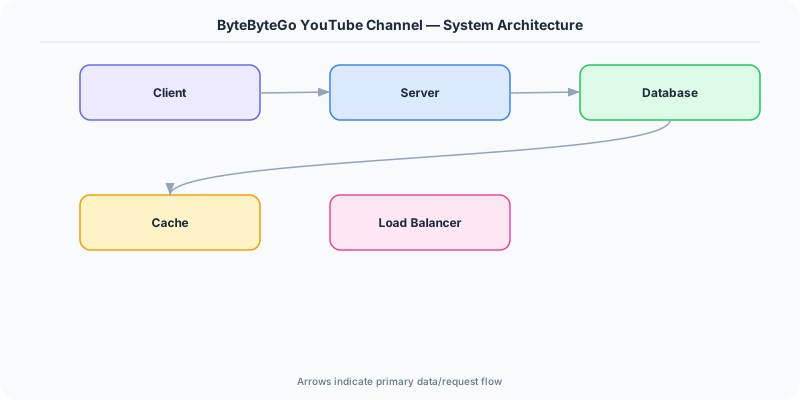
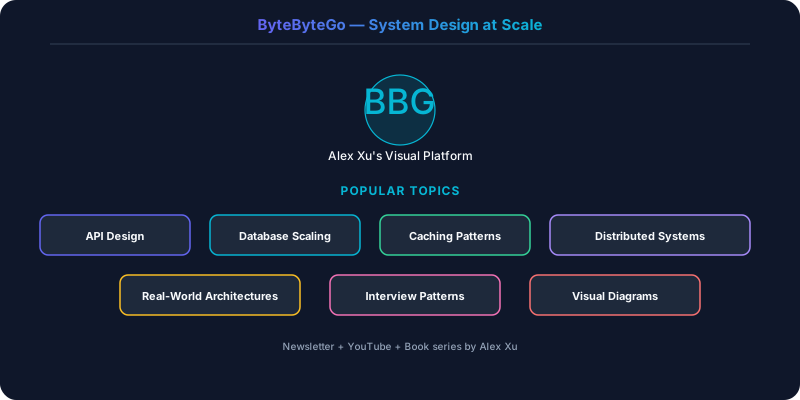
ByteByteGo is a system design education platform created by Alex Xu, author of the "System Design Interview" book series. The YouTube channel has over 1 million subscribers, and the accompanying newsletter on Substack is one of the most widely read engineering newsletters.
The channel's signature style is animated diagrams that walk through system architectures step by step. Each video takes a complex topic — how Kafka works, how a CDN delivers content, how databases handle transactions — and breaks it down into a visual narrative that builds understanding incrementally.
Content Structure
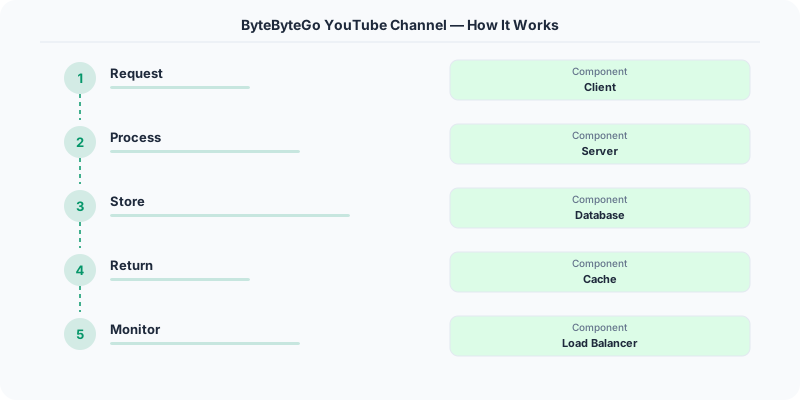
Short-Form Explanations (5-15 minutes)
The bulk of ByteByteGo's content is short, focused videos on specific topics:
- Protocol explainers: How HTTPS works, how WebSocket connections are established, how DNS resolves a domain name. These videos show the actual packet flow and handshake steps.
- System comparisons: REST vs GraphQL, SQL vs NoSQL, Kafka vs RabbitMQ. Each comparison uses a visual side-by-side format that makes the tradeoffs immediately apparent.
- Architecture deep dives: How Netflix manages content delivery, how Uber matches riders with drivers, how Slack delivers real-time messages. These videos reference actual engineering blog posts and papers.
- Concept primers: CAP theorem, consistent hashing, database indexing, rate limiting algorithms. Each video covers the core idea, explains why it matters, and shows how it appears in production systems.
Newsletter Deep Dives
The ByteByteGo newsletter (on Substack) provides longer-form written content with the same visual style. Each post includes hand-drawn-style diagrams that explain a system design topic. The newsletter covers topics that are too detailed for a short video: API gateway patterns, database migration strategies, monitoring and observability architectures.
Strengths
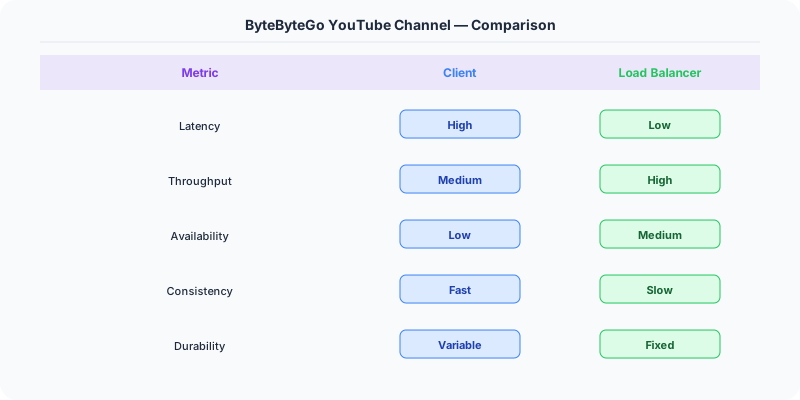
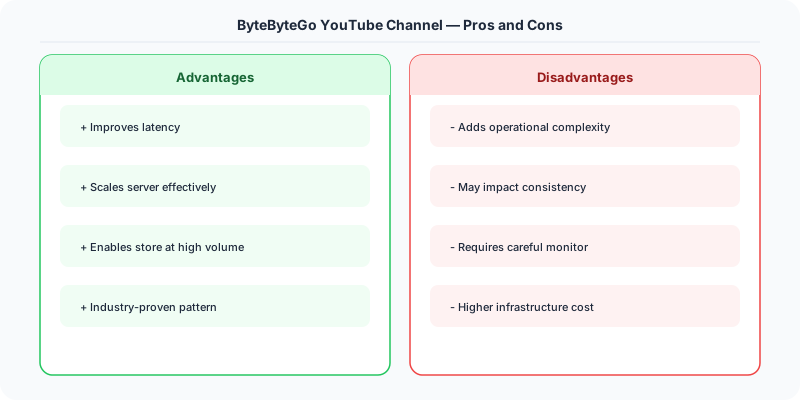
Visual clarity. ByteByteGo's diagrams are among the best in the system design education space. The step-by-step animated approach shows how data flows through a system, which is harder to convey in text. For visual learners, this format is significantly more effective than reading about the same concepts.
Breadth of coverage. The channel covers an enormous range of topics: networking protocols, database internals, caching strategies, message queues, API design, CI/CD pipelines, cloud architecture, and interview-specific content. If a topic is relevant to system design, ByteByteGo has probably covered it.
Production-grounded. Videos frequently reference real engineering blog posts from Netflix, Uber, Airbnb, and other companies. The content is not purely theoretical — it connects concepts to how actual production systems use them.
Consistent quality. The production quality of both videos and newsletter posts is high. Diagrams are clear, narration is concise, and the pacing is fast enough to keep attention without rushing through complex points.
Accessible to all levels. A junior engineer can understand the HTTPS handshake video. A senior engineer still finds value in the architecture deep dives. The channel manages to serve both audiences by keeping explanations clear without oversimplifying.
Weaknesses
Surface-level treatment. Each video covers a topic in 5-15 minutes, which means depth is limited. The video on consensus algorithms, for example, introduces Raft and Paxos but does not explain the proof of safety or the subtle edge cases that matter in production. Engineers studying for staff+ level interviews need deeper resources.
Repetition across content. Some concepts (CAP theorem, consistent hashing, load balancing) appear in many videos because they are foundational. If you watch the channel systematically, you will encounter the same explanations multiple times.
Book upselling. ByteByteGo is a business, and the channel frequently promotes the System Design Interview books and the paid newsletter tier. This is understandable but can feel repetitive.
Limited hands-on content. The channel is entirely explanatory. There are no coding walkthroughs, no infrastructure setup guides, and no live problem-solving sessions. Engineers who learn by building will need to supplement with other resources.
Recommended Videos for System Design Preparation
For engineers preparing for interviews, these videos provide the highest return on time invested:
- "System Design Interview: A Step-By-Step Guide" — The framework video that shows how to structure your approach to any system design question.
- "How Does the Internet Work?" — Covers DNS, TCP/IP, HTTP, and routing. Essential networking foundations.
- "Top 6 Most Commonly Used Distributed System Patterns" — A rapid overview of the patterns (ambassador, circuit breaker, CQRS, event sourcing, leader election, pub/sub) that appear in interviews.
- "How to Choose the Right Database" — A decision framework for SQL vs NoSQL, with specific guidance on when to use each database type.
- "Kafka Architecture Explained" — One of the clearest visual explanations of how Kafka partitions, replicates, and serves consumers.
How to Use ByteByteGo Effectively
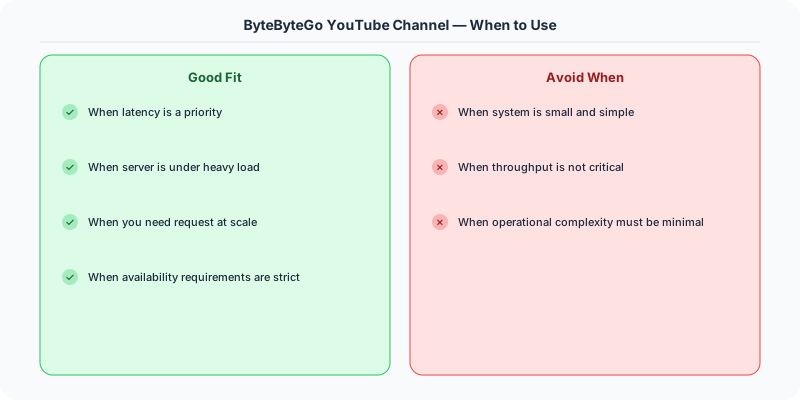
For broad preparation (2-4 weeks): Watch one video per day on a topic you are weak on. Take notes on the key tradeoffs and diagram the architecture from memory. Use the newsletter for deeper coverage of topics that need more attention.
As a supplement to DDIA or the System Design Primer: When you encounter a concept in text that is hard to visualize (replication strategies, consensus protocols, caching architectures), find the corresponding ByteByteGo video for a visual walkthrough.
For quick refreshers: Before an interview, watch the 5-minute summary videos on the topics most likely to come up. The visual format is ideal for rapid review because the diagrams are more memorable than text notes.
ByteByteGo is not a substitute for deep study, but it is the best visual introduction to system design concepts available today.
Practical Implementation for .NET Developers
In a .NET application, you would typically implement this pattern using the following approach:
ASP.NET Core setup: Create a service class that encapsulates the logic, register it with dependency injection, and inject it into your controllers or minimal API endpoints. The built-in DI container handles lifecycle management.
Entity Framework Core: For database interactions, EF Core provides the ORM layer. Use migrations for schema management and raw SQL for performance-critical queries. Consider Dapper for read-heavy paths where EF Core's overhead matters.
Azure integration: If deploying to Azure, leverage managed services — Azure Cache for Redis, Azure SQL, Azure Service Bus, Azure Cosmos DB. These eliminate operational overhead and provide built-in monitoring through Application Insights.
Testing: Use xUnit with Testcontainers for integration tests that spin up real databases in Docker. Mock external dependencies with NSubstitute. The WebApplicationFactory class lets you test your entire HTTP pipeline in-process.
Monitoring: Add Application Insights telemetry to track request latency, dependency calls, and custom metrics. Use structured logging with Serilog to make production debugging possible:
Log.Information("Processing order {OrderId} for {CustomerId}", orderId, customerId);
This gives you searchable, structured logs in Azure Monitor or Seq.
Key Takeaways for Interviews
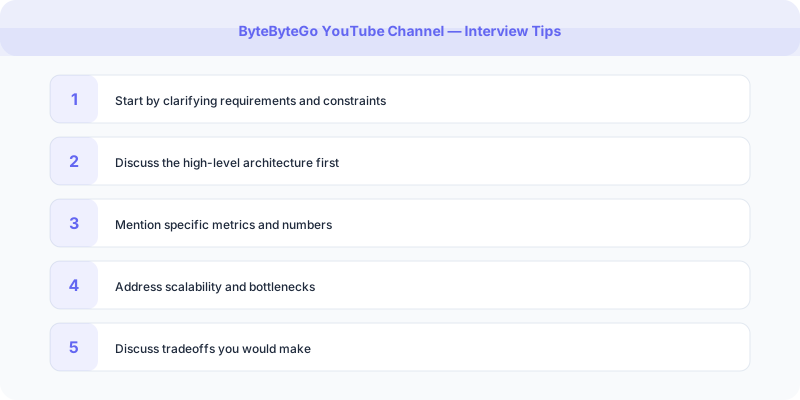
- Understand the core problem this resource addresses and be able to explain it in 2-3 sentences without jargon
- Know the key trade-offs: what does this approach optimize for, and what does it sacrifice?
- Be ready to compare this with alternative approaches and explain when each is appropriate
- Connect the concepts to real-world systems you have worked with or studied
- Demonstrate depth by discussing failure modes and how they are handled
How This Applies to Modern .NET Systems
The concepts from this resource translate to .NET through several established libraries and patterns:
Azure managed services often abstract away the underlying distributed systems complexity, but understanding the fundamentals helps you configure them correctly, debug issues, and make informed architectural decisions.
NuGet packages in the .NET ecosystem provide production-ready implementations of many patterns described in this resource. Before building custom solutions, check if a well-maintained package already exists.
ASP.NET Core middleware pipeline is where many of these patterns are implemented in practice: caching, rate limiting, health checks, and circuit breaking all fit naturally into the middleware model.